The Soul Set
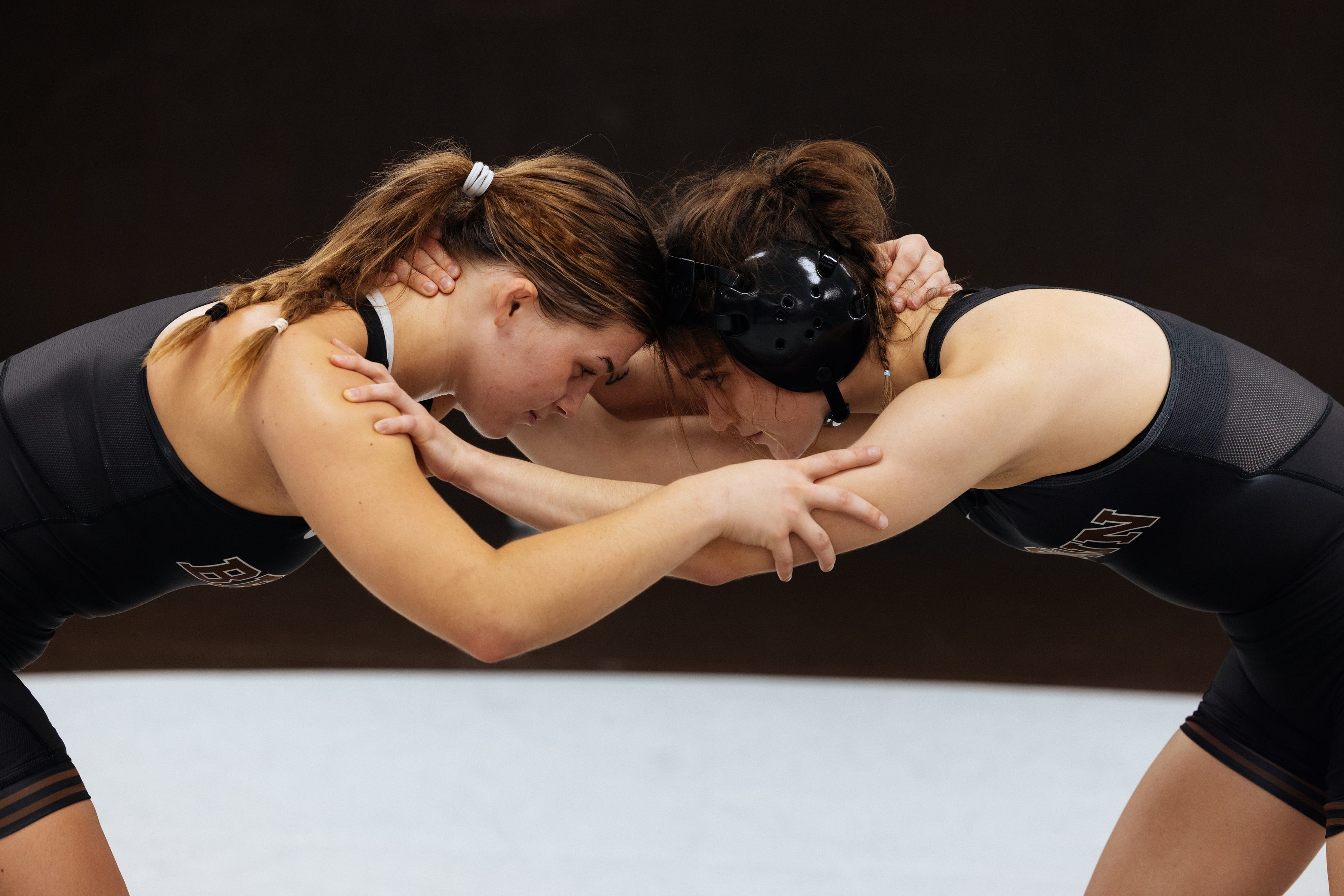
Calli Gilchrist and the Brown Women's Wrestling Squad blaze a new trail forward.
WORDS BY SAM HOCKLEY-SMITH
PHOTOGRAPHY BY KATIE MCCURDY
VICTORYJOURNAL.COM
Calli Gilchrist was seven years old when she started wrestling. Both her uncles wrestled in high school and so did her mom. The way she tells it, though, she probably would’ve ended up doing it even if it wasn’t in the family. “I was a pretty active kid,” she says. “So I think wrestling was an easy route. I was always trying to wrestle my little brother, so it just kind of felt right. It was everything I needed.”
Gilchrist landed on wrestling, which is typically male dominated, even for the under-10 crowd, after trying baseball and soccer. Neither stuck. “I was so physical, but I didn’t exactly have a lot of hand-eye coordination as a kid,” she says. “Showing up, I think I was one of two girls. I walk in and it’s a room full of little boys running around. I remember being very confused, shy, nervous…all those things.”


She stuck with it. The make or break moment came in early middle school, Gilchrist thinks probably the summer between sixth and seventh grade. She went to a wrestling camp at the University of Iowa. “That was a pretty pivotal moment for me, where it was either going to be…Okay, like either I’m all in, or this is something I do in my free time.” Then, when she was in eighth grade, COVID hit. Stuck at home, Gilchrist divided her time between training and schoolwork. The time she was able to dedicate to wrestling clarified her love of it. “I was like, Oh, this is what I want to do for the rest of my life. I realized that I never wanted to not do this sport anymore.”
The world opened back up. Gilchrist graduated from middle school and kept wrestling as she went into high school. After her sophomore year, she transferred to Choate Rosemary Hall, a coed boarding school in Wallingford, Connecticut, about an hour from where she grew up. Choate Rosemary Hall wasn’t just any school. It had a boys wrestling program that was over 100 years old, and by 2022, it had a girl’s team, too.
Gilchrist and her friend Sara McLaughlin were the first recruits on the team. In 2025 she was named the first girl’s wrestling prep national champion ever. By 2026, there were 18 girls on the team, and they were dominating all over the country. It was time for Gilchrist to think about college, and how wrestling would factor into her choice. “I knew that I wanted to be part of starting and creating something,” she says. “[Choate Rosemary] was kind of like a test run, and it was a huge success. Being able to do that my junior year was confirmation that I wanted to do it in college.”


Most of the time, when kids go to college, they’re not yet sure what they want to do. But Gilchrist knew that wrestling had to be a core part of her experience. She was accepted at Brown University and decided to attend. The thing was, they didn’t really have an established women’s wrestling team, which meant that, as a recruit, be entering into college with a level of scrutiny on her that the majority of incoming students never have to deal with. It was a big risk, but it paid off.
Gilchrist’s coach, Nick Lattanze, who attended Brown himself and wrestled while there, had a plan to make a great squad: “The first thing I had to do was understand the environment: what resources existed, what the culture was, where the gaps were,” he tells me over email. “Then I had to find the right person to build around—someone who could be a face of the program and put us on the map, beyond being a great wrestler. Someone whose presence would define what this program stands for and make the decision easy for other recruits. That was Calli. Everything else — the recruiting, the fundraising, the platform-building — it all grew from there. It’s about finding the right people at the right time, and not being afraid to ask for help.”
The first time Lattanze saw Gilchrist wrestle, he knew she had something special. “I remember thinking ‘You can’t teach that,’” he says. “That style, that fearlessness, and that desire to compete, that’s not a skill set. That’s a soul set. She attacks the sport the way she approaches life...with joy, with risk, with excitement, and with full commitment. I hope she wins every title there is to win, but that’s almost beside the point. Champions get crowned every year. There’s only ever going to be one Calli Gilchrist. What she represents, how she carries herself, how she competes...that’s going to echo in this program long after any medal.”


This isn’t lost on Gilchrist, who has what she describes as an “innate want to be part of creating something.” “This was way better than anything I could have imagined,” she says of her first year on the team. “I’m not even saying I was trying to keep my hopes low and we surpassed those. I had relatively high hopes and we have surpassed those.” Now she’s in a position where, in addition to defining what it means to be on the Brown women’s wrestling team, she’s building a whole culture. “We have a culture we now get to curate,” she says. “That is one of my favorite things about getting to create a program. It’s up to me. It’s up to coach. It’s up to the girls we bring in next year to create a team culture that hopefully stays with Brown women’s wrestling forever.”
She doesn’t outright say this, but part of the culture Gilchrist has been helping build has been a sort of quiet, calm, confidence. A focusing inward on embracing personal style on the road to becoming a world-class wrestler. Gilchrist tells me about a learning experience she had last year. “I start to get a little bit antsy and I rush things. I really rushed things at club nationals in the finals and it did not work out well for me. I ended up putting myself in so many bad places. I didn’t do what we’d been working on.” But rather than beat herself up, Gilchrist took a step back. Kept her cool. Refocused.
The way she talks about her evolution as a wrestler after that moment is as someone who has learned to trust herself. To not go on autopilot, exactly, but allow her body to work in harmony with her mind to implement the moves she’s been working in her subconscious since she was a small child. “My goal is jut always to get better. I think the best way to look at the sport is that you can’t be perfect at wrestling. I think that’s why I like it so much. You’re never going to hit a move perfectly. If you try to hit it perfectly it’s going to fall apart. You’re not going to be able to do it,” she says.
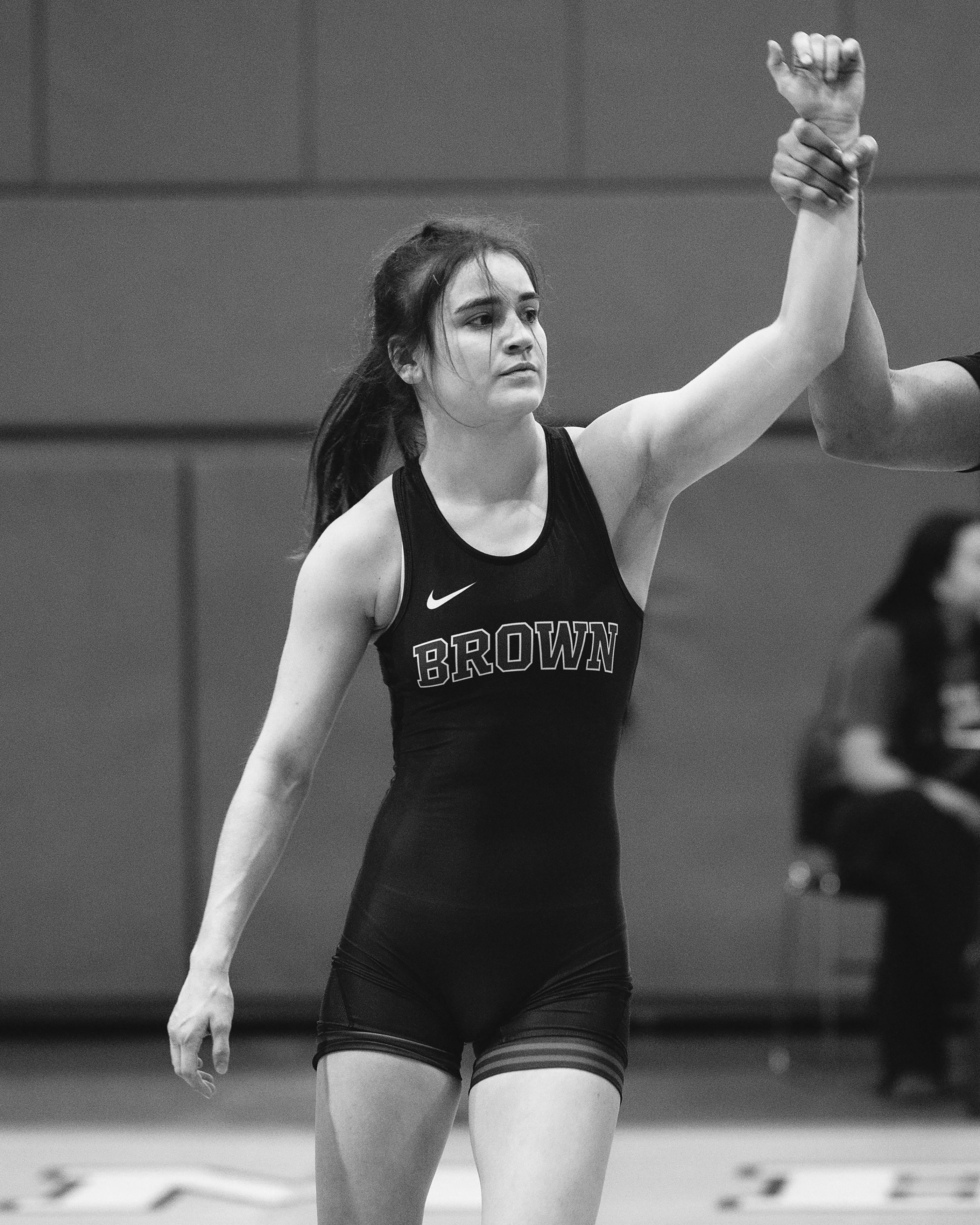
Now, Gilchrist is focused on refining her wrestling style and continuing to build out the Brown program with Coach Lattanze and the other women wrestlers. Toward the end of our conversation we start talking about what you do once you feel in harmony with your body like this. How do you continue to improve? What do you focus on? “I go for big throws a lot,” she says. “I’m not sure where that came from. I [actually] go for big stuff [often]. I think it keeps things interesting, and I want to be an interesting person to watch.” Then she smiles. “I’m not necessarily a funky wrestler, but I like big moves. I like throwing people way over my head.”
Subscribe now and receive a couple Victory stories a month, straight to your inbox. We’d love your paid subscription support if you’re able. It helps us keep doing what we’re doing. In the meantime, look out for more great digital content, and we’ve still got copies of back issues, as well as subscriptions available. There’s never been a better time to enter into the world of Victory Journal. There’s a lot to discover.