WORDS BY SUPRIYA NAIR
PHOTOGRAPHY BY SOPHIE GREEN
VICTORYJOURNAL.COM
In Ghulam, a high-octane Hindi adaptation of On the Waterfront released in 1998, the Eva Marie Saint character—here, a debutante named Alisha—first appears onscreen on a very large motorcycle. In her helmet, leather jacket, and trousers, Alisha is indistinguishable from the rich male thugs she runs with. When the helmet comes off, a river of dark hair, like in a fairytale, falls to frame her perfect young face. The loutish young hero is thunderstruck. So are we. She’s a nice girl; she’s going to be a nice girl; with a face like that, she can’t help but be nice. That moment of introduction, though, is one of thrilling doubt.
In India, as in most parts of the world, this character was for a long time more fantasy than reality. In the crushingly masculine worldview of popular Hindi movies, for instance, the female biker was a descendant of the jodhpurs-wearing equestrienne of an earlier era. She was never nasty. Instead, she was a rich, sheltered virgin, so sublime in her innocence that she thought she could get away with acting like a man. Her eventual conquest was experienced as a supreme satisfaction with order reasserting itself. Soon after we meet her, Alisha puts away childish things. She gives up her black boots and many-zippered jacket to adorn herself in translucent white cotton, rendering herself pure and thin out of both grief for the dead brother and love for the hero.
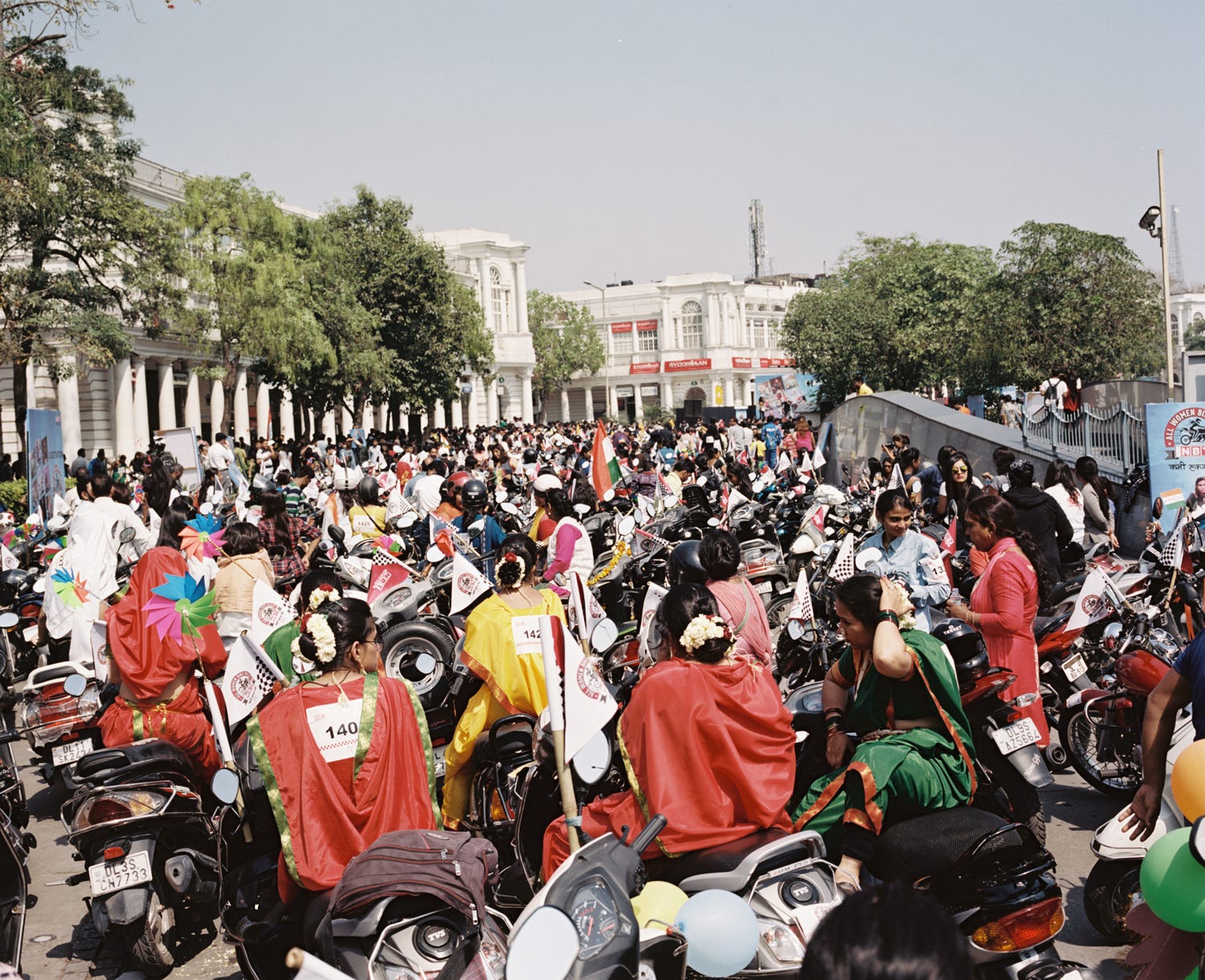
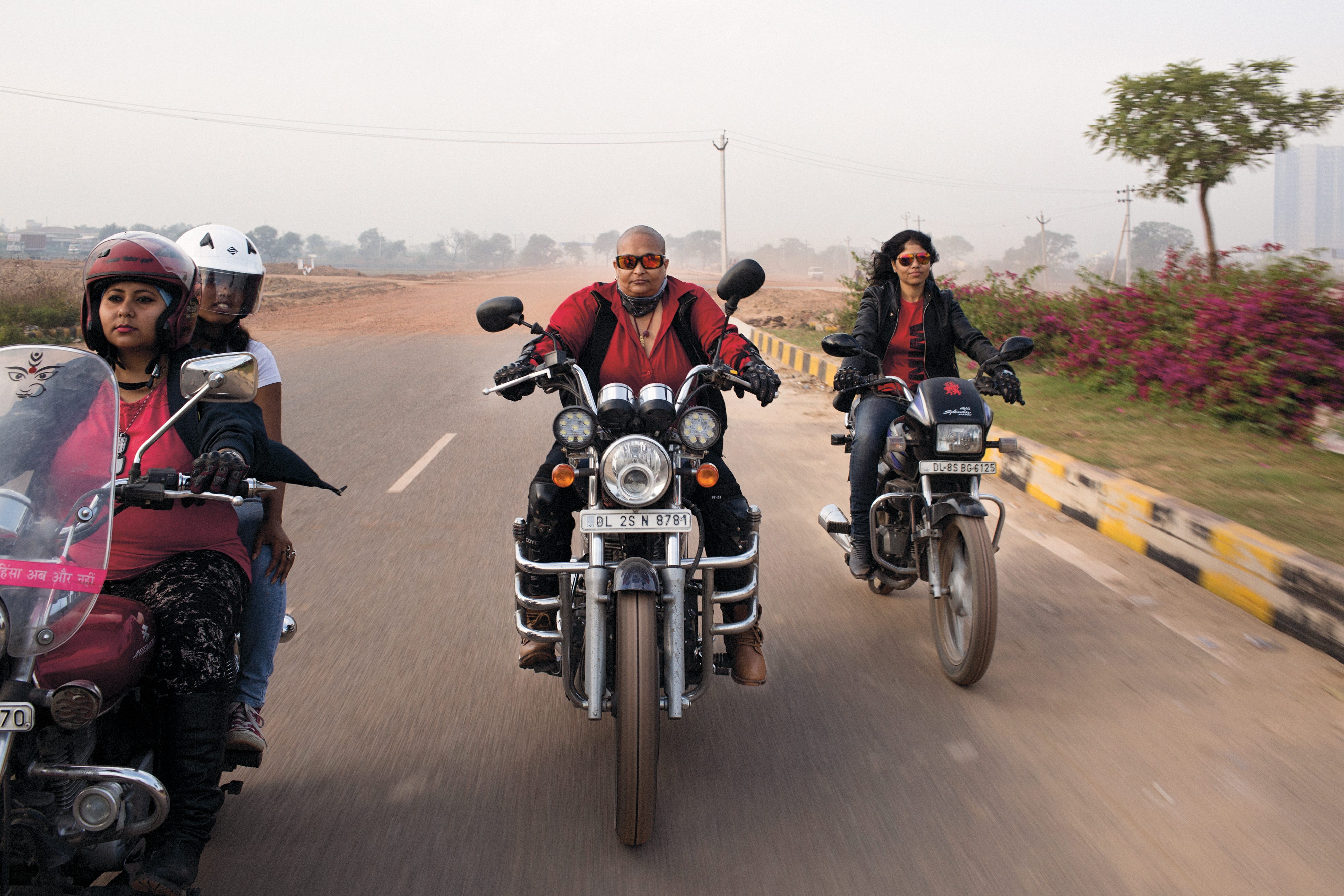
That was 20 years ago. In 2017, 35 percent of the clientele of the venerable motorcycle company Hero Honda were estimated to be women, the highest figure in the world. The most hardcore of them are the “Bikerni,” a Hinglish term that the country’s first all-female riding club have created for themselves.
“In India there are riders and commuters,” Shabnam Akram, a 53-year-old from Delhi, explains. “Commuters are working-class as a rule and would jump into a car if they could afford it. Riders are a mixed lot. Mostly they are people who actually enjoy riding enough to often forego cars to be able to ride.”
A group of 600-odd women, the Bikerni began with a woman named Urvashi Patole in the western Indian city of Pune before expanding to cities around the country. The riders, whose ages range from the late teens to mid-50s, get in touch from across India—Delhi, Hyderabad, Chennai, Guwahati, Mumbai, Kolkata, and Pune—to plan road trips, attend motorcycling events, and back broadly feminist social causes. Together, they’ve skirted the old silk roads, going as far north as the Nubra Valley in Ladakh and high up near the Himalayan border of India and China. They’ve ridden through lonely, unfriendly districts in the dead of night, and felt goosebumps biking down one of the world’s most magnificent avenues, the Rajpath, or “King’s Way,” which runs from India’s presidential residence to India Gate.
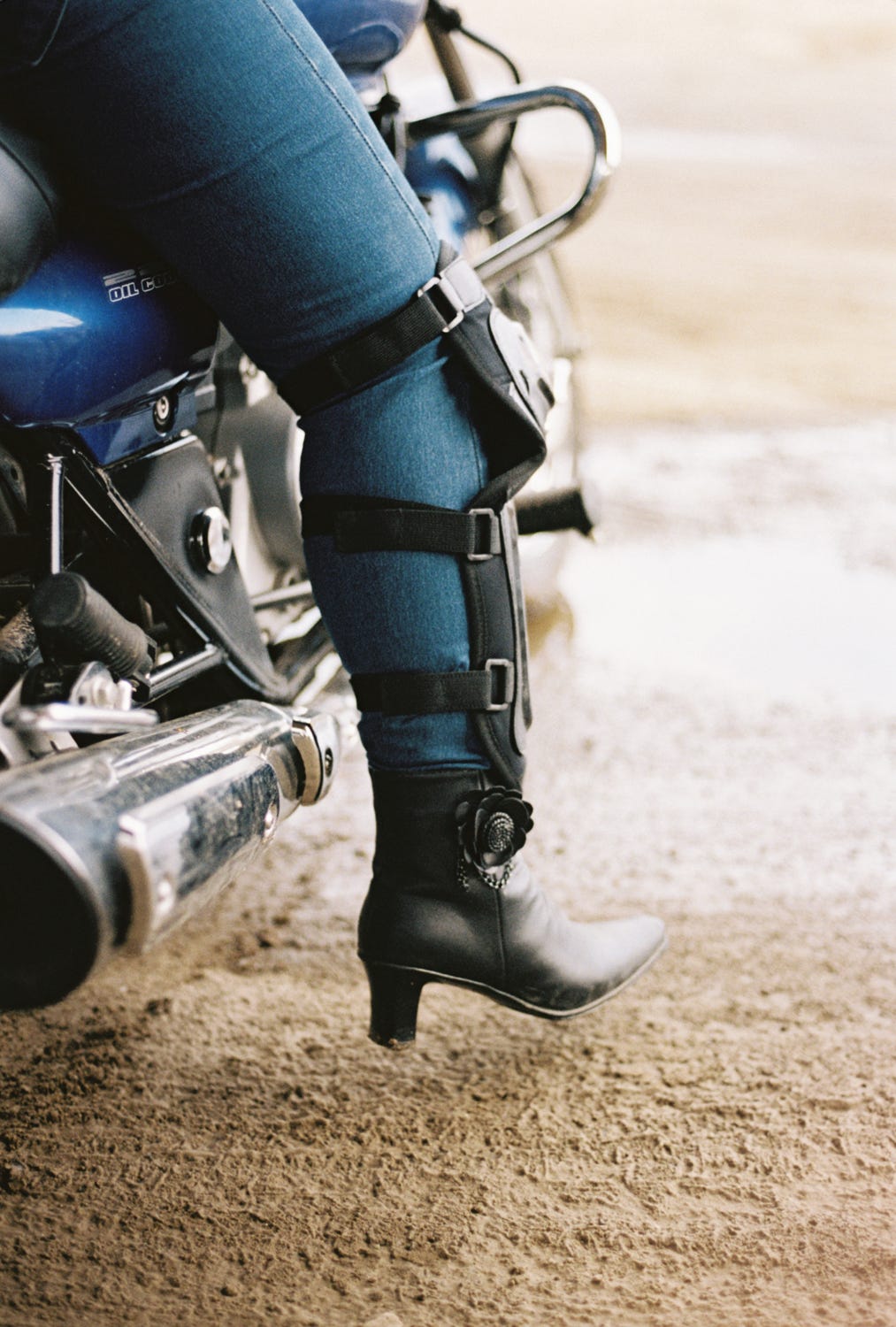
Unlike Alisha, these riders don’t vroom into view as visions of unreal perfection. To passersby whose only familiarity with women on bikes comes from MotoGP and oil company calendars, many of them may seem incongruous, everyday faces with jackets shrugged over utilitarian clothes and traditional jewelry. Their dangly earrings and thin gold chains—in some cases, the necklace that identifies them as married Hindu women—are just as real as the women you see on the street who don’t pass by in a blur. But there are also Bikernis who love their boots and sunglasses—getting “all dolled up with my curls ruling the world,” as 23-year-old Prabhpreet Kaur Bhatti from Delhi puts it— and embrace biker culture. One 35-year-old biker, Anita Krishnan, calls her bike “Mystique” because it’s blue and slinky, like the character from X-Men.
The heroine of Rachel Kushner’s novel The Flamethrowers describes the feeling of driving her bike through American city streets as “pure … it made the city a stage, my stage, while I was simply getting from one place to the next.” The Bikernis, too, are gazed at in this spirit of drama, except their stage isn’t just the city street. It’s all of India, its ice and slush and dust, a hinterland beyond their urban homes too vast be encompassed in any one person’s imagination.


Not every horror story you hear about being a woman in India is true, but sweeping impressions of a culture can be wrong in general and still irritatingly accurate in their particulars. Take the basic question of having a life in public as a woman. In India, the act of simply stepping outdoors becomes exponentially easier if you are seen to have some kind of purpose. For the average Indian woman, all vehicles are imbued with purpose. You get a cycle because it takes you to school. A hand-me-down ungeared scooter takes you to college. You buy your own for the commute to an exhilaratingly powerful first or second job. (You will marry, shortly after, and pool your money to buy your first car).
A motorcycle is something you help a male family member—usually a young, slightly reckless one—buy. In the representative Facebook picture of an Indian family, the father, helmet over reflective sunglasses, possessively clutches the handlebars. The mother, thin, young, probably dressed in a sari for Sunday family visits, perches sidesaddle, precariously, one hand on her mister’s shoulder, the other clutching the back of the seat. The pleats of her clothes are as tightly gathered to her closed knees as the inevitable small child is mashed between her parents’ bodies.
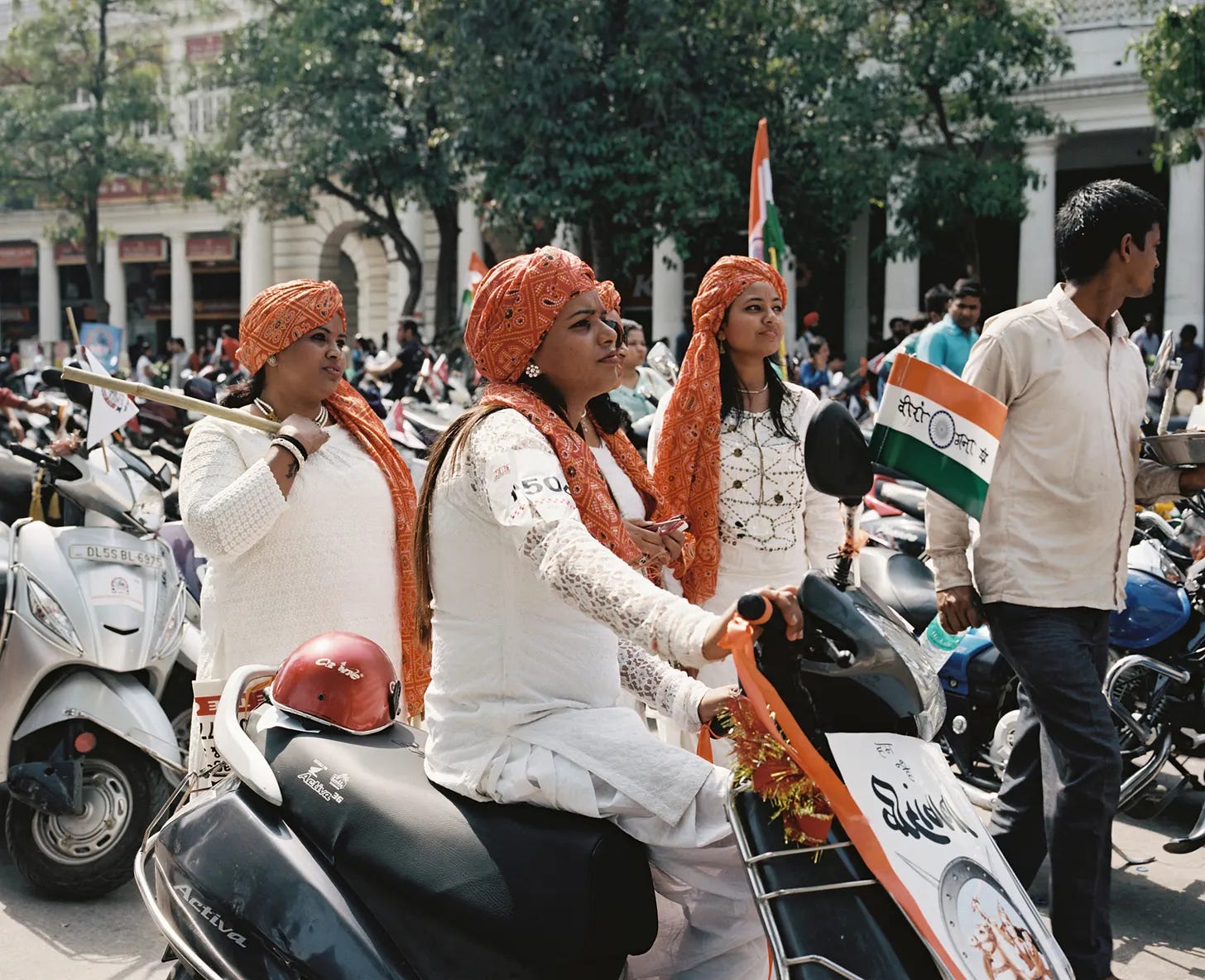
Decorum is a kind of armor worn in public. It’s peculiar to the subcontinent in this specific regard, as a Nigerian friend remarked once in Goa, watching an archetypal family putter past on the street. “We may have some catching up to do,” he said wryly, “but, you know, African women can sit astride the bike.”
“A woman opening her legs on a machine that symbolizes masculinity does not gel well with the culture,” Himani Chandel, who lives in a town in the Himalayan foothills, points out. “It doesn’t just mark you out as rebellious and ‘overempowered.’ It may well be confused with the idea that you are ‘available.’ This is the challenge for women riders in India: maintaining dignity and grace while doing something which symbolizes the opposite.”
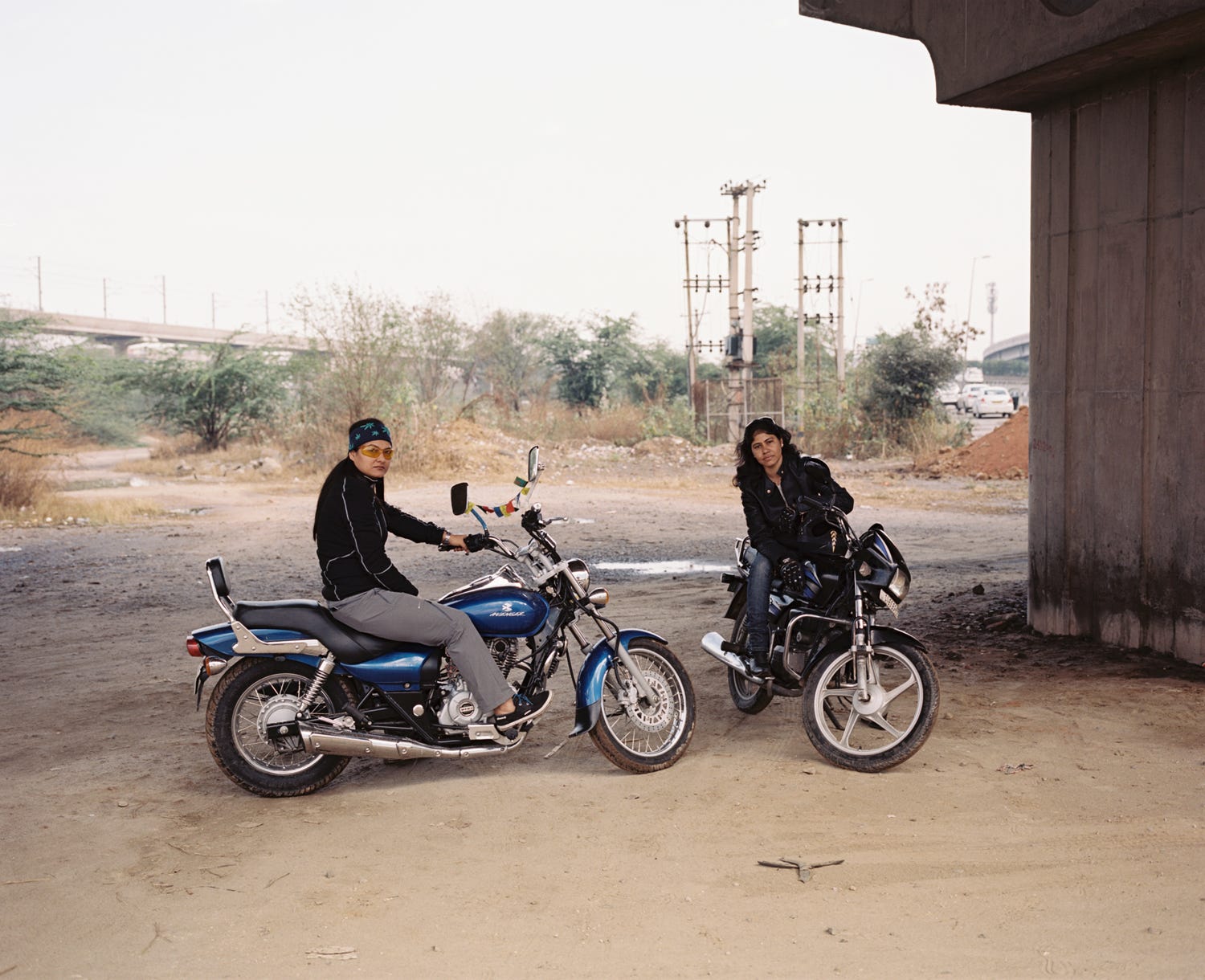
Back home, the Bikernis have neighbors, uncles, strangers on the street where they live who think women shouldn’t sit astride the bike. Women riding motorbikes for fun give passersby pause in most parts of the world because women doing anything for fun in public is a rare sight. On the road, these women encounter people amazed at their very existence. “But you’re so short,” the young Delhi biker Prabhpreet Kaur Bhatti is told often. “Do your feet even touch the ground?” When Vaishali Master, a group veteran from Jaipur, lost her way in the hinterlands, she stopped to ask a small shepherd where she was. The child shot back: “First tell me this. Are you a girl or a boy?”
But they are secure in their commitment to riding because they are protected by each other—and because they enjoy it more than anything in the world. In each other’s company, the Indian highway becomes a site of breezy adventure rather than the endless, sun-distorted mirage that someone else has to navigate for you (or worse, a dark, silent middle-of-nowhere on which you have no fellow travelers). Rider after rider said that getting on the bike means freedom from confinement, dependence on men, and social norms. “Biking is a silent shout for me,” one woman, Annapurna Singh, says. Shabnam Akram sums up the dream: “I would like to see a world where women riding motorcycles is no longer special, and comes as naturally as it does to men.”
The Bikernis are proud of their visibility. It reflects on both their fight against restraints at home and those on the women whose homes they pass. Some ride in secret; others, playful, wrestle with husbands and brothers for the keys to the family vehicle. They know they are combatants in a kind of battle. People stare, of course, but in the rearview mirror, through the dust cloud, the Bikernis can see them watching. As Vaishali Master says, they look glorious—“like woman icons and real-life heroines.”
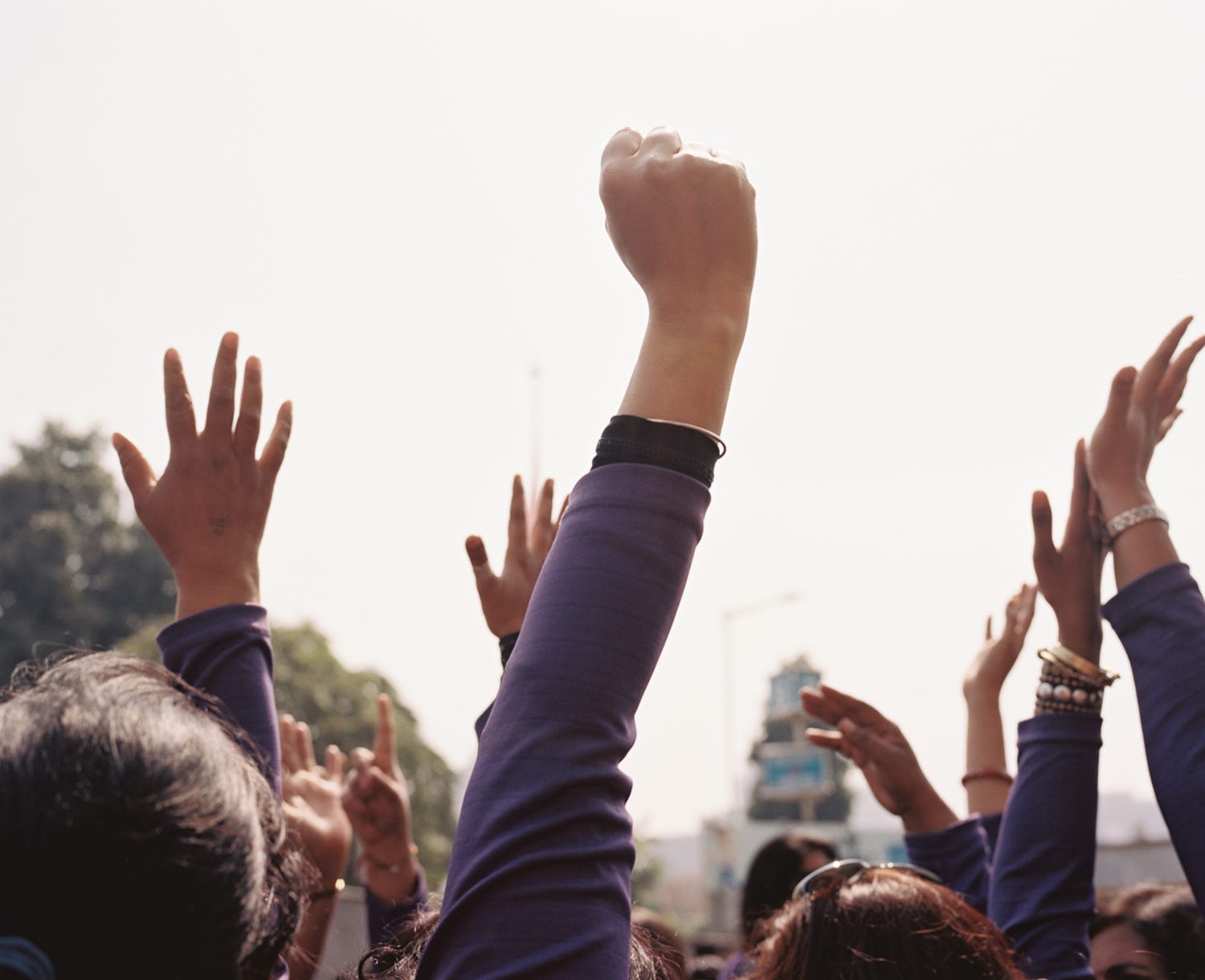
They don’t even have to be angel-faced teen idols to do it. Kushner writes that the combination of women and machines “made men curious. They seemed to think it had something to do with them.” That’s elegant bravado; of course women and machines have everything to do with men. Rosie the Riveter isn’t telling women anything they don’t know, after all. She’s telling men, the skeptics, the keepers of the keys, that machines don’t run because they were made from a man’s rib.
Subscribe now and receive a couple Victory stories a month, straight to your inbox. We’d love your paid subscription support if you’re able. It helps us keep doing what we’re doing. In the meantime, look out for more great digital content, and we’ve still got copies of back issues, as well as subscriptions available. There’s never been a better time to enter into the world of Victory Journal. There’s a lot to discover.